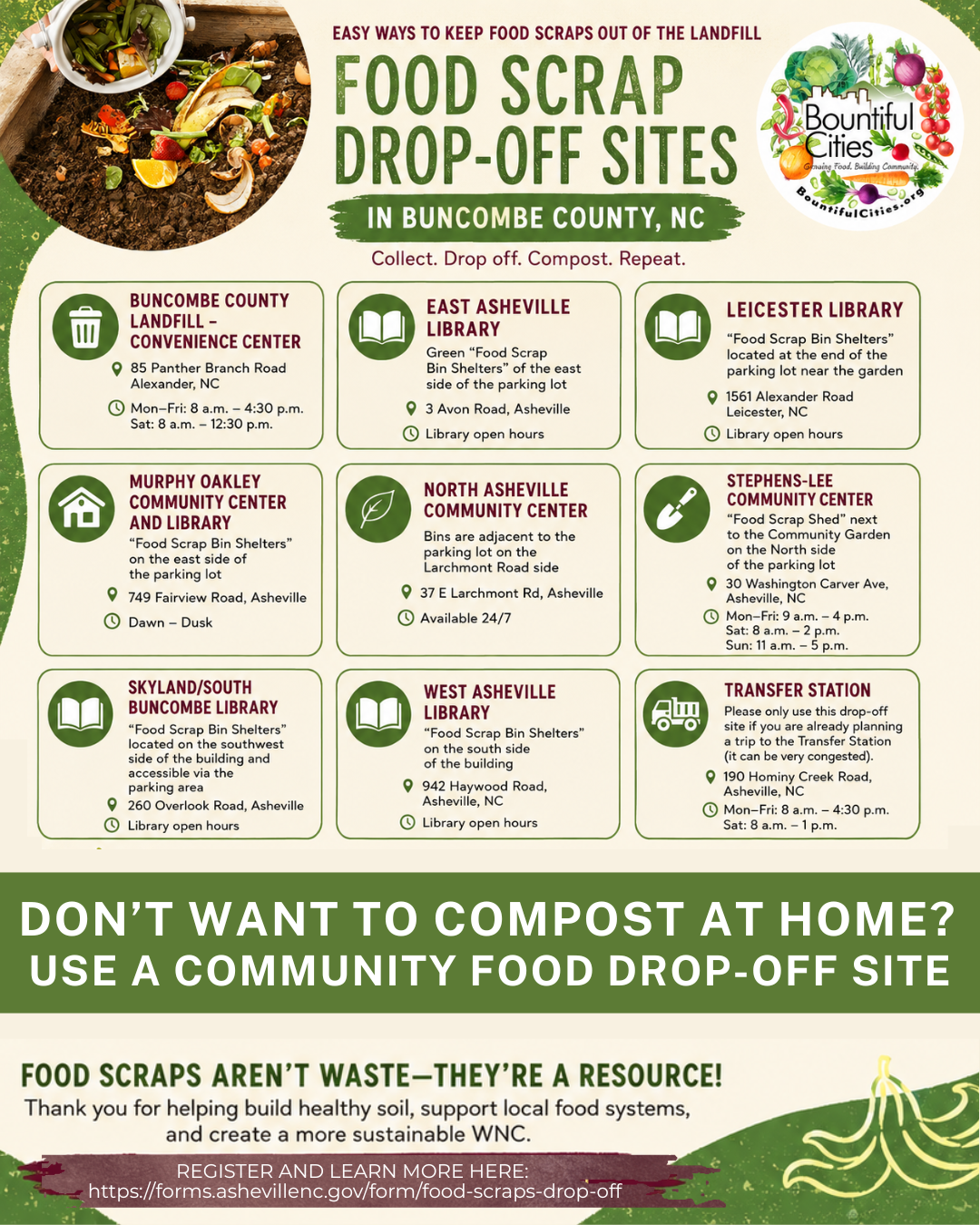
Don't Want to Compost at Home? Food Scrap Drop-Offs are a Great Option.
Backyard composting isn't for everyone.
Some people have limited outdoor space. Others travel frequently, live in apartments, or simply prefer a more convenient option.
The good news is that you can still keep food scraps out of the landfill through food scraps drop-off programs.
While backyard composting is a great option for many households, it's not the only way to keep food scraps out of the landfill. Whether you live in an apartment, have limited outdoor space, travel frequently, or simply don't want to manage a compost pile, community food scrap drop-off sites make it easy to participate.
Food Scraps Don't Have to Go in the Trash
Food waste is the single largest category of material sent to U.S. landfills, accounting for nearly one-quarter of all landfilled waste. Yet those food scraps still contain valuable nutrients that can be returned to the soil through composting.
When food scraps are composted instead of landfilled, they become a valuable resource that helps improve soil health, support plant growth, and build stronger local food systems.
A Convenient Option for Asheville and Buncombe County Residents
One of the biggest misconceptions about composting is that it requires a backyard.
In reality, Asheville and Buncombe County residents have access to multiple food scrap drop-off locations throughout the community, including libraries, community centers, and county facilities.
That means you can collect food scraps in a small container at home and simply drop them off during your regular errands.
No compost pile. No turning. No maintenance.
What Can You Bring?
Many programs can accept materials that are not recommended for backyard compost systems, including:
Meat, fish, and bones
Certified compostable cups, cutlery, and food containers
Always check the guidelines for your local drop-off site before participating.
From Food Scraps to Healthy Soil
Food drop-offs help create a local cycle that benefits everyone.
Food scraps become compost. Compost builds healthy soil. Healthy soil supports gardens, farms, and food-growing spaces. Healthy food strengthens our communities.
Instead of sending nutrients to the landfill, composting keeps them working right here in Western North Carolina.
Start Small
Getting started can be as simple as keeping a container on your kitchen counter and collecting fruit and vegetable scraps, coffee grounds, eggshells, and other compostable materials throughout the week. When your kitchen container is full, empty it into your curbside compost bin or take it to a community compost site. If you can't make it to the compost site right away, you can also freeze your food scraps until you're ready. Freezing compost helps reduce odors, discourages fruit flies, and keeps your kitchen container cleaner between drop-offs.
When the container is full, bring it to a nearby food scrap drop-off site.
That's it.
Whether you compost at home or use a community drop-off program, every bucket of food scraps diverted from the landfill helps build healthier soil and a more resilient local food system.
Find a food scrap drop-off location near you and start composting today.